


If you are planning a trip to the UAE, whether it is for tourism, visiting family, or a short business stay, a solid UAE health insurance plan is something you need to think about early on. For most visitors, health insurance is mandatory, and even in cases where it is not strictly required at the border, it is still highly recommended. Medical care in the UAE is among the best in the region, but it also comes with high costs that can quickly add up without proper coverage.
This is where health insurance for visitors in the UAE becomes important. A suitable policy helps meet visa requirements, protects visitors from unexpected medical bills, and makes it easier to access hospitals and clinics if something goes wrong. This is especially true for travelers arranging health insurance for visitors in the UAE from India, who make up a large portion of short-term visitors each year.
Too Long; Didn’t Read (TL;DR)
Here is everything you need to know about visitor insurance in UAE:
- Health insurance is required for most visitors to the UAE and is still strongly recommended even for visa-exempt travelers
- Medical care in the UAE is high quality but can get pretty expensive without insurance
- Visitor insurance must be arranged before arrival and usually needs to meet minimum coverage rules
- Most plans cover emergencies and hospital stays but exclude routine check-ups and pre-existing conditions
- Coverage options vary by duration, hospital network, and added benefits like COVID-19 treatment
- Always keep your insurance documents handy and check that your preferred hospital is in the insurer’s network
Why Health Insurance Is Mandatory for Visitors
Health insurance rules in the UAE are designed to protect both visitors and the healthcare system. While the exact requirements can vary depending on visa type and nationality, DHA Health Insurance Requirements state that most visitors are expected to have valid medical insurance in place before entering the country. Understanding why this rule exists helps clarify why health insurance for visitors in the UAE is treated as a basic requirement rather than an optional extra.
Visa Requirements
For many nationalities, proof of health insurance is required when applying for a UAE visit or tourist visa. Immigration authorities may ask for confirmation that the visitor has coverage that meets minimum standards before approving the visa. Without this, visa applications can be delayed or refused.
Visitors from visa-exempt countries are sometimes allowed to enter without showing insurance at immigration. However, this does not remove the responsibility to have coverage. Hospitals and clinics will still require insurance details or upfront payment before treatment. This is why arranging health insurance for visitors in the UAE before arrival is always the safer choice.
Rules for health insurance for expats in UAE are quite clear. According to these rules for arranging health insurance for visitors in the UAE from India, insurance documents must be submitted during the visa process, making early preparation especially important.
Minimum Coverage Standards
Visitor health insurance in the UAE must meet certain minimum coverage requirements. These standards ensure that visitors can receive emergency care without placing financial strain on hospitals.
Most visitor policies include:
| Coverage Type | Typical Requirement |
| Emergency medical treatment | Minimum USD 30,000 (around AED 150,000) |
| Hospitalization | Included for emergency admissions |
| Repatriation of mortal remains | Included |
These requirements apply across all approved health insurance plans to consider for visitors in UAE, regardless of the visitor’s country of origin.
What Is Typically Excluded in Visitor Health Insurance
While visitor insurance provides important protection, it is not the same as a full resident health plan. Knowing what is excluded helps set realistic expectations and avoids confusion later. This applies equally to health insurance for visitors in the UAE and to health insurance for visitors in the UAE from India.

Pre-existing and Chronic Conditions
Most visitor health insurance policies exclude pre-existing and chronic conditions. This means illnesses or medical issues that existed before the insurance policy started are usually not covered. Common examples include diabetes, high blood pressure, asthma, and heart conditions.
Some policies make limited exceptions if a pre-existing condition leads to a sudden, life-threatening emergency. In such cases, emergency treatment to stabilize the patient may be covered, but ongoing care is generally not included. This limitation is standard across most health insurance plans to consider for visitors in UAE.
Cosmetic Procedures and Routine Check-Ups
Visitor health insurance focuses on emergencies rather than planned or preventive care. Cosmetic procedures, aesthetic treatments, and elective surgeries are almost always excluded. Routine check-ups, vaccinations, and preventive screenings are also typically not covered.
In simple terms, health insurance for visitors in the UAE is designed to step in when something unexpected happens, not to cover everyday medical needs.
Recommended Health Insurance Plans for Visitors
When researching health insurance plans to consider for visitors in UAE, several insurers are commonly mentioned because their plans meet government requirements and are widely accepted by hospitals. Below is an overview of some well-known options, explained in a factual and non-promotional way.
ADNIC (HALA Insurance)
ADNIC’s HALA visitor insurance plan is frequently used by short-term visitors. It typically includes emergency medical coverage up to AED 150,000, along with hospitalization and repatriation benefits. The plan also offers 24/7 multilingual support, which can be helpful for international visitors.
This option is often considered by families and older travelers, including those arranging health insurance for visitors in the UAE from India, due to its clear policy structure and local hospital access.
Daman (Ziyarah Plan)
The Daman Ziyarah Plan is specifically designed for visitors and is available in different durations, such as 40, 70, or 100 days. This makes it suitable for both short trips and longer family visits.
Some versions of the plan include COVID-19 hospitalization coverage, which remains relevant for many travelers. Among health insurance plans to consider for visitors in UAE, this plan is commonly chosen for its predictable coverage period.
GIG Gulf
GIG Gulf offers inbound travel insurance that combines medical coverage with protection against certain travel-related issues. In addition to emergency medical treatment, policies may include benefits for lost baggage or flight delays.
For visitors looking for broader protection alongside health insurance for visitors in the UAE, this type of plan can be a practical option.
Sukoon Insurance
Sukoon Insurance provides visitor plans that comply with UAE government directives and are generally positioned as lower-cost options. These plans typically cover emergency medical expenses, accidental death, and repatriation.
They are often reviewed by travelers comparing health insurance plans to consider for visitors in UAE, particularly those visiting friends or family for short stays.
Using Lookinsure’s online comparison tool you can get quotes from these providers all at once:
Key Considerations When Choosing a Visitor Health Insurance Plan
Choosing the right policy involves more than just meeting visa requirements. A few practical considerations can make a big difference if medical care is needed during the visit. This is true for anyone arranging health insurance for visitors in the UAE, including those coming from India.
Purchase Before Arrival
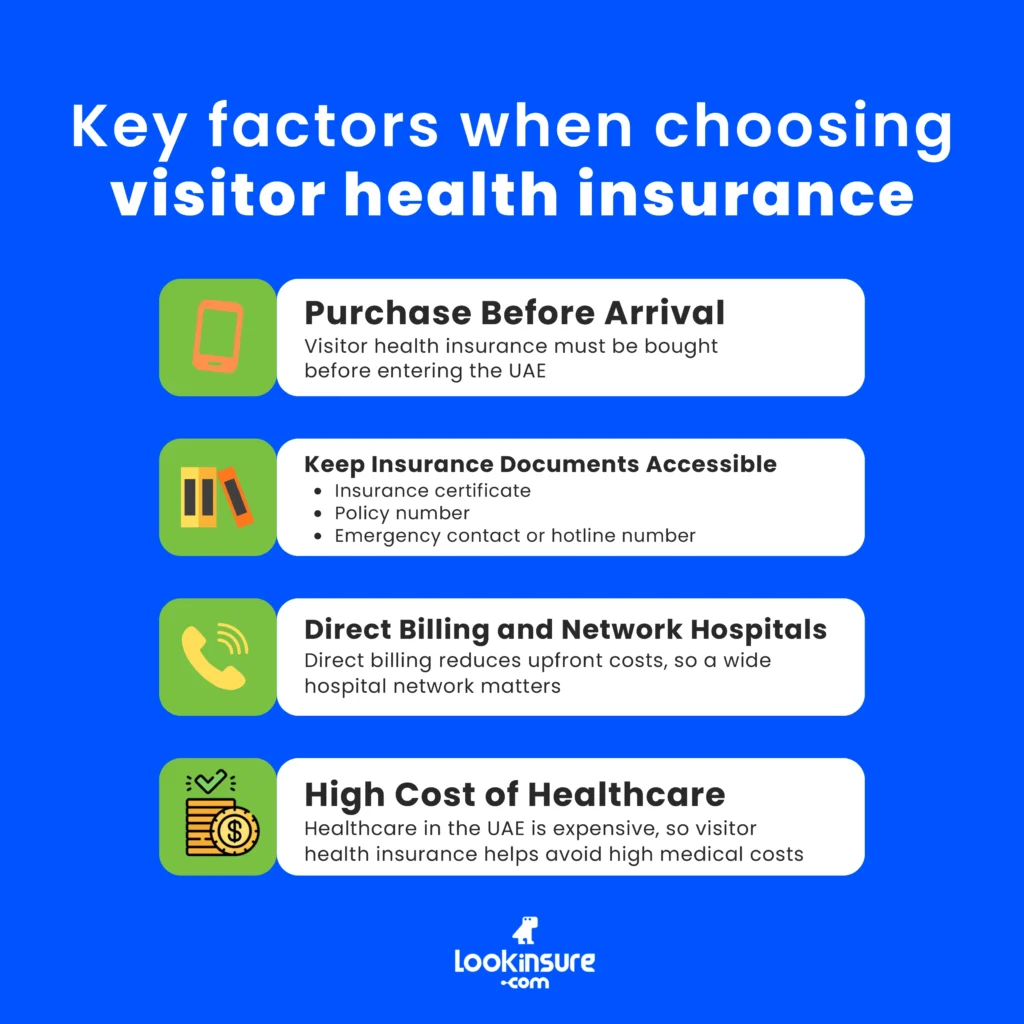
Visitor health insurance should always be purchased before entering the UAE. Many policies are designed specifically for pre-arrival issuance and may not be valid if bought after arrival. Insurance is also often required during the visa application process.
All approved health insurance plans to consider for visitors in UAE follow this general rule, making early planning essential.
Keep Insurance Documents Accessible
Visitors should keep both digital and printed copies of their insurance documents. This includes:
- Insurance certificate
- Policy number
- Emergency contact or hotline number
Hospitals may request these documents before providing treatment. Having them readily available avoids delays during stressful situations.
Direct Billing and Network Hospitals
Direct billing allows hospitals to bill the insurer directly instead of asking the patient to pay upfront. This can significantly reduce out-of-pocket expenses during emergencies.
Before choosing a policy, it is worth checking the insurer’s hospital network. A wider network increases the chances that direct billing will be available. This is an important point when comparing health insurance plans to consider for visitors in UAE.
High Cost of Healthcare
Healthcare in the UAE is modern and efficient, but it is also expensive. Emergency room visits, diagnostic tests, and hospital stays can result in high bills within a short time.
This is why health insurance for visitors in the UAE is not just a formality. It provides real financial protection and ensures access to quality care without unexpected costs.
Conclusion
Health insurance is an essential part of visiting the UAE. It helps meet visa requirements, protects against high medical costs, and ensures that visitors can access emergency care when needed. While some travelers may not be asked for proof of insurance at entry, going without coverage is a significant risk.
Whether you are researching health insurance for visitors in the UAE, comparing health insurance plans to consider for visitors in UAE, or arranging health insurance for visitors in the UAE from India, the key principles remain the same. Purchase insurance before arrival, understand what is covered and excluded, choose a policy with a good hospital network, and keep your documents accessible.
With the right planning, visitor health insurance provides peace of mind and allows you to focus on enjoying your stay in the UAE.
Frequently Answered Questions
1. Is health insurance mandatory for all visitors to the UAE?
Health insurance is mandatory for most visitors applying for a UAE visa. Even visa-exempt visitors are strongly advised to arrange health insurance for visitors in the UAE due to high medical costs.
2. Do visitors from India need special health insurance when traveling to the UAE?
There is no separate category, but health insurance for visitors in the UAE from India must meet the same minimum coverage requirements as for other nationalities.
3. What is the minimum coverage required for visitor health insurance in the UAE?
Most visitor policies must include at least USD 30,000 (around AED 150,000) in emergency medical coverage, along with hospitalization and repatriation benefits.
4. Are pre-existing conditions covered under visitor health insurance plans?
Most health insurance plans to consider for visitors in UAE exclude pre-existing conditions, except for limited emergency treatment in life-threatening situations.
5. Can visitor insurance cover emergency medical treatment for COVID-19?
Some visitor policies include COVID-19 hospitalization coverage. This should always be confirmed in the policy wording before purchase.
6. How can visitors ensure their preferred hospital is in-network for direct billing?
Before buying insurance, visitors should review the insurer’s hospital network list and confirm that their preferred facilities are included.


Comments (0)
Leave a comment