


If you ask a group of UAE residents what exactly their health insurance covers, you’ll probably hear a mix of confident guesses. Many people only find out what their policy really includes when they are already sitting in a clinic wondering whether the bill will be covered or not.
In the UAE health insurance is mandatory, but health insurance disease coverage UAE is not the same across all plans. Coverage depends on the insurer, the type of plan and sometimes even the emirate where the policy is issued.
In this article, we’ll walk through what diseases are typically covered under UAE health insurance, how chronic and pre-existing conditions are treated, common exclusions and more!
Too Long; Didn’t Read (TL;DR)
- Health insurance is mandatory in the UAE, but health insurance disease coverage UAE varies widely depending on the insurer, plan type, and policy terms.
- Standard plans usually cover inpatient, outpatient, and emergency care, including common illnesses and medically necessary treatments.
- Chronic and pre-existing conditions are covered by law, but often after a waiting period and with limits on costs, medications, or visits.
- Serious conditions like cancer, heart attacks, and strokes are generally covered, while cosmetic, experimental, and some lifestyle-related treatments are usually excluded.
- To avoid surprises, always review the Table of Benefits, check the insurer’s hospital network, and consider add-ons if you need broader coverage.
Understanding Disease Coverage in UAE Health Insurance
Before getting into specific illnesses, it helps to understand how disease coverage works in general. Most UAE health insurance policies are structured around categories of care rather than individual diseases. Once you understand those categories, the rest becomes much easier to follow.
What Is Included in Standard Health Insurance?
Standard or basic health insurance plans in the UAE are designed to meet minimum legal requirements. These plans usually cover a wide range of medical conditions, but with limits on where and how treatment can be received.
In most cases, basic plans include coverage for common illnesses such as infections, injuries, and medically necessary treatments. Hospital admissions, doctor consultations, diagnostic tests, and prescribed medications are usually included, as long as the treatment is considered medically necessary.
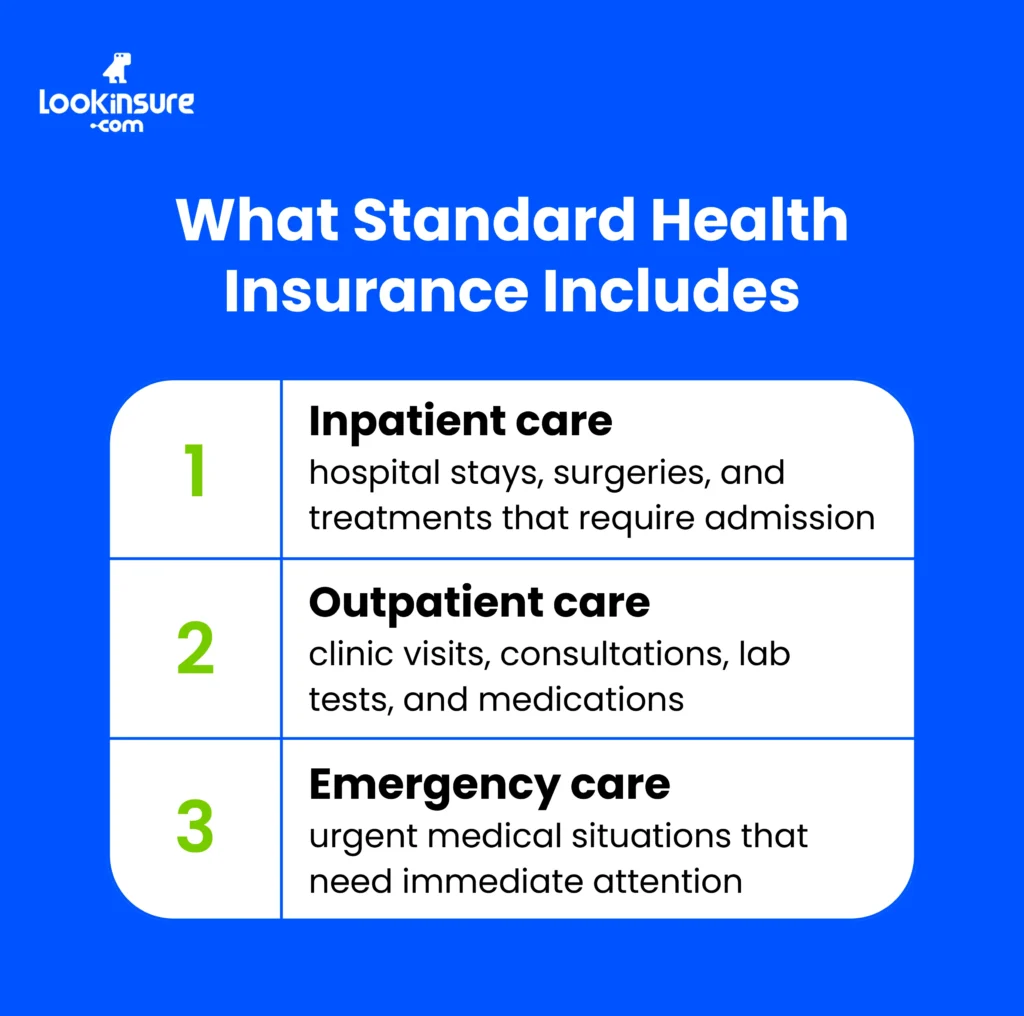
Coverage is generally split into three main areas:
- Inpatient care, which includes hospital stays, surgeries, and treatments that require admission
- Outpatient care, such as clinic visits, consultations, lab tests, and medications
- Emergency care, which covers urgent medical situations that need immediate attention
The level of access within each category depends on your plan. Some policies limit outpatient visits or require referrals before seeing specialists.
Chronic and Pre-Existing Conditions
Chronic and pre-existing conditions are one of the most misunderstood parts of health insurance disease coverage UAE. A pre-existing condition is usually defined as any illness or medical issue that existed before the insurance policy started.
In the UAE, insurers are required to offer coverage for pre-existing and chronic conditions, but this coverage often comes with conditions of its own. Many policies apply a waiting period, commonly six months, before coverage for these conditions becomes active. During this time, treatment costs may not be covered.
Common chronic conditions like diabetes, hypertension, asthma, and heart disease are typically covered after the waiting period, but annual limits, co-payments, and medication caps may apply. It is always important to check how each condition is handled under your specific policy rather than assuming full coverage.
Types of Diseases Often Covered
While policies differ, there are broad categories of illnesses that are commonly included under diseases covered by health insurance UAE plans. The table below gives a practical overview.
Acute and Life-Threatening Conditions
These are usually given high priority by insurers, especially when emergency treatment is involved.
| Condition Type | Coverage Details |
| Cancer | Covered under most plans, including chemotherapy and surgery, subject to limits |
| Heart attacks | Emergency treatment and hospitalization typically covered |
| Stroke | Emergency care and inpatient treatment included |
| Major surgeries | Covered when medically necessary and pre-approved |
Emergency hospitalization is almost always covered, even under basic plans, as long as treatment is received within the insurer’s approved network.
Common Illnesses and Routine Treatments
When it comes to health insurance disease coverage UAE medical plans almost always include these conditions which most people encounter during everyday life.
| Condition Type | Coverage Details |
| Flu and infections | Covered through outpatient visits and medications |
| Minor surgeries | Included when performed within the network |
| Diagnostic tests | Lab tests and imaging usually covered |
| Preventive care | Screenings and vaccinations may be included in some plans |
Preventive care coverage varies widely. Some plans include annual health check-ups, while others focus strictly on treatment rather than prevention.
Mental Health and Specialized Treatments
Mental health coverage has improved in recent years, but it is still an area where coverage levels differ significantly.
| Treatment Type | Coverage Details |
| Psychological consultations | Often covered with visit limits |
| Psychiatric treatment | Covered under certain plans |
| Therapy sessions | Higher coverage in comprehensive policies |
Basic plans may offer limited mental health support, while premium plans often include more sessions, broader provider access, and better reimbursement terms.
Diseases Usually Not Covered
Even the most comprehensive health insurance policies have exclusions. Understanding these exclusions is just as important as knowing what is covered.
Cosmetic and Elective Procedures
| Procedure Type | Coverage Status |
| Cosmetic surgery | Not covered unless medically required |
| Aesthetic treatments | Excluded |
| Non-essential procedures | Generally not covered |
If a procedure is performed purely for appearance rather than medical necessity, it is almost always excluded.
Experimental and High-Risk Treatments
| Treatment Type | Coverage Status |
| Experimental therapies | Not covered |
| Alternative medicine | Usually excluded |
| Non-approved treatments | Not covered outside insurer network |
Health insurance disease coverage UAE seldom extends to the treatment of these conditions that are not recognized by UAE health authorities or that fall outside approved medical guidelines are typically excluded.
Lifestyle-Related Exclusions
| Treatment Type | Coverage Status |
| Substance abuse treatment | Often excluded or limited |
| Fertility treatments | Usually excluded or capped |
| Weight-loss surgery | Excluded unless medically necessary |
These exclusions vary by insurer, so reviewing your policy wording is essential if these treatments are relevant to you.
How to Ensure Your Plan Covers Specific Diseases
Choosing a policy based on price alone is not 100% suitable for you. A little extra time spent reviewing details upfront can make a big difference.
Reviewing the Table of Benefits
The Table of Benefits is where you will find the most important information about health insurance disease coverage UAE. It outlines coverage limits, co-payments, waiting periods, and exclusions.
Pay close attention to annual limits, medication caps, and whether certain treatments require pre-approval. Comparing Tables of Benefits across different policies is one of the most effective ways to spot meaningful differences.
Checking the Insurer’s Network
Disease coverage is only useful if you can access the right healthcare providers. Always check which hospitals, clinics, and specialists are included in the insurer’s network.
Some plans operate on a direct billing basis, where the insurer pays the provider directly. Others require you to pay upfront and claim reimbursement later. Knowing this in advance helps avoid confusion during treatment.
Seeking Add-Ons or Riders
If you have specific health concerns, health insurance add-ons in UAE can make a big difference. Many insurers offer riders for critical illness coverage or expanded disease modules.
These add-ons can increase coverage limits for serious conditions or reduce waiting periods for certain treatments. The premium may go up, but it brings comfort to those at higher health risk.
Conclusion
Disease coverage under UAE health insurance is not one-size-fits-all. What is included depends on the plan type, insurer, and policy terms. Understanding medical insurance disease coverage UAE means looking beyond the headline benefits and reviewing the Table of Benefits and provider network carefully.
For anyone with chronic or pre-existing conditions, planning ahead is important. Checking waiting periods, coverage limits, and available add-ons before purchasing a policy can prevent delays and unexpected expenses later on.
Frequently Asked Questions
1. Which diseases are typically covered under UAE health insurance plans?
UAE health insurance typically covers inpatient care (hospitalization, surgeries, emergency, ICU), outpatient services (consultations, imaging, labs), maternity and newborn care, and prescription medicines within coverage limits. Coverage for preventive care, ambulance, mental health, and rehabilitation varies by plan, with dental/vision often as optional riders.
2. Are pre-existing or chronic conditions covered by standard health insurance in UAE?
Yes, but often after a waiting period and with specific limits depending on the insurer and plan.
3. Can I get coverage for mental health and psychological disorders?
Many plans offer mental health coverage, though visit limits and provider access vary policy by policy.
4. What types of diseases are usually excluded from coverage?
Cosmetic procedures, experimental treatments, and certain lifestyle-related treatments which are not directly related to the individual’s health are commonly excluded.
5. How can I check if my preferred hospital or specialist is included in my plan?
Review the insurer’s network list or contact your provider. You should also ask for confirmation before purchasing the policy if you want to keep certain options.
6. Are there add-ons or critical illness riders available for extra disease coverage?
Yes, many insurers offer add-ons that expand coverage for serious illnesses or specific conditions.



Comments (0)
Leave a comment