


Healthcare is not something most people think about until they actually need it. Yet, in a country like the UAE, where populations are constantly growing and lifestyles are rapidly changing, a well-organized healthcare system becomes essential. This is exactly where Emirates Health Services, commonly referred to as EHS, plays a major role. Many residents and newcomers often ask what is EHS?, how it operates, and what services it provides.
In simple terms, EHS is the federal authority responsible for managing public healthcare services across the Northern Emirates. From hospitals and clinics to digital platforms and preventive programs, EHS supports millions of people every year. Understanding its structure, services, and impact also helps residents make informed decisions about their medical needs and health insurance in UAE, which remains mandatory in most emirates.
Too Long; Didn’t Read (TL;DR)
- What is EHS? It stands for Emirates Health Services, the federal authority managing public healthcare in the Northern Emirates.
- EHS supervises hospitals, clinics, medical centers, digital platforms, and preventive programs.
- The benefits of EHS in the UAE include affordable treatment, preventive screenings, health awareness campaigns, and digital convenience.
- By following strong EHS best practices, the organization maintains consistent healthcare quality and patient safety.
- EHS also plays an important role in health insurance in UAE, especially through medical fitness testing, health cards, and government healthcare access.
What is EHS?
To clearly understand healthcare delivery in the UAE, it helps to begin with a simple question: what is EHS? Emirates Health Services is a federal government authority operating under the Ministry of Health and Prevention (MOHAP). Its main responsibility is to manage and regulate public healthcare facilities across Sharjah, Ajman, Umm Al Quwain, Ras Al Khaimah, and Fujairah.
Before EHS was established, healthcare services were handled by multiple entities, which sometimes resulted in uneven service quality and health insurance requirements. EHS brought these services under one unified system, ensuring consistent standards, centralized management, and improved patient care.
Today, EHS oversees a wide network of hospitals, primary healthcare centers, and specialized clinics. It also operates several digital healthcare platforms that allow patients to access services quickly and conveniently.
Key Facts About EHS
| Category | Details |
| Full Name | Emirates Health Services |
| Parent Authority | Ministry of Health and Prevention (MOHAP) |
| Role | Public healthcare management |
| Coverage | Northern Emirates |
| Main Focus | Treatment, prevention, digital health, and patient well-being |
| Core Services | Hospitals, clinics, health cards, screenings, and telemedicine |
Main Objectives of EHS
- Deliver accessible and affordable healthcare
- Improve service quality across public hospitals
- Expand preventive care programs
- Promote health awareness
- Enhance patient experience through digital solutions
These objectives explain not only what is EHS?, but also why it has become one of the most important healthcare pillars in the country.
EHS Services
EHS provides a wide range of medical services designed to cover both routine healthcare needs and complex health insurance for disease coverage in UAE. These services are available through government hospitals, primary healthcare centers, mobile clinics, and digital platforms.
Main Categories of EHS Services
| Service Category | Description |
| Health Card Services | Issuance and renewal of government health cards |
| Medical Fitness Testing | Mandatory tests for residency visas and employment |
| Preventive Healthcare | Screenings, vaccinations, and early detection programs |
| Outpatient Clinics | Consultations with general and specialist doctors |
| Inpatient Care | Emergency treatment, surgeries, and hospital stays |
| Dental Care | Preventive and therapeutic dental services |
| Maternal & Child Care | Pregnancy, delivery, and pediatric services |
| Mental Health Services | Counseling, therapy, and psychiatric consultations |
| Telemedicine | Remote medical consultations |
| Digital Health Services | Appointment booking, reports, and patient records |
Each of these services reflects strong EHS best practices, focusing on quality, efficiency, and patient comfort. The introduction of telemedicine and digital booking platforms has significantly reduced waiting times and improved overall patient experience.
EHS Initiatives
Before discussing specific programs, it helps to clarify what an initiative actually means. In healthcare, an initiative refers to a targeted project or campaign launched to improve service quality, patient engagement, or community health.
EHS regularly introduces initiatives that support public well-being, healthcare education, and service development.
| Initiative | Purpose |
| TAMENI Initiative | Keeps families informed about inpatient treatment |
| Youth Voice Program | Engages youth in healthcare development |
| Nursing Scholarships | Supports nursing education and workforce growth |
| Telemedicine Promotion Campaign | Encourages remote healthcare access |
| Blood Donation Campaigns | Promotes voluntary blood donations |
| Mental Well-being Support | Emotional support programs for healthcare staff |
These programs demonstrate EHS best practices by prioritizing transparency, community involvement, and workforce development.
EHS Health Care Facilities
One of the most visible aspects of EHS is its wide healthcare network. EHS operates:
- 17 public hospitals
- 64 primary healthcare centers
- 134 total medical facilities
These facilities are spread across Sharjah, Ajman, Umm Al Quwain, Ras Al Khaimah, and Fujairah, ensuring healthcare access even in remote areas.
Patients can easily locate hospitals and clinics through the official EHS website, mobile applications, or government service portals. This wide coverage is one of the strongest benefits of EHS in the UAE, especially for families, elderly residents, and individuals with chronic health conditions.
Benefits of EHS in the UAE
The benefits of EHS in the UAE go far beyond basic medical treatment. EHS focuses on prevention, education, accessibility, and digital transformation, all of which contribute to better health outcomes.
Main Benefits
| Benefit | Impact |
| Affordable Treatment | Reduced consultation and procedure costs |
| Preventive Care | Early detection of diseases |
| Health Awareness Programs | Public education on healthy lifestyles |
| Digital Healthcare Services | Faster access to care |
| Residency Medical Support | Visa medical testing and documentation |
| Occupational Health Cards | Workplace safety compliance |
| Emergency Healthcare | Rapid response and hospital care |
| Community Outreach | Mobile clinics and health campaigns |
These benefits of EHS in the UAE support individuals, employers, families, and government institutions alike. For businesses, EHS ensures workforce health compliance, including mandatory corporate health insurance. For families, it offers affordable healthcare and preventive services. For the wider public, it promotes long-term health awareness.
EHS Best Practices
EHS best practices revolve around three main pillars: patient-centered care, preventive healthcare, and digital transformation.
Core EHS Best Practices
- Patient-Focused Systems: Simplified processes, shorter waiting times, and easy appointment booking
- Preventive Healthcare Programs: Screenings, vaccinations, and early diagnosis
- Digital Platforms: Online reports, e-consultations, and appointment scheduling
- Staff Development: Continuous training and professional education
- Quality Control: Strict hospital safety standards and performance monitoring
By implementing these EHS best practices, the organization ensures that medical services remain consistent, safe, and reliable across all facilities.
Health Insurance in UAE and the Role of EHS
Health insurance in UAE is mandatory in most emirates, making it a key part of daily life. While private insurance providers handle coverage policies, EHS supports the system through public healthcare access, medical testing, and government medical services.
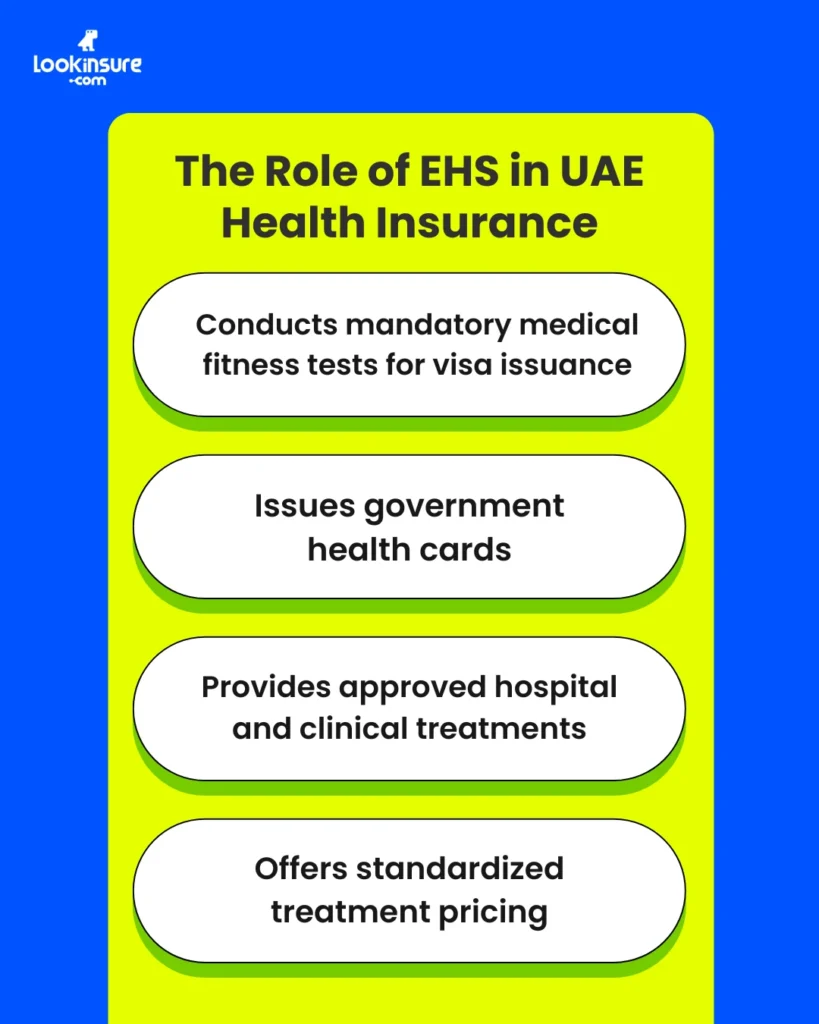
How EHS Supports Health Insurance in UAE
- Conducts mandatory medical fitness tests for visa issuance
- Issues government health cards
- Provides approved hospital and clinical treatments
- Offers standardized treatment pricing
Many residents rely on EHS hospitals and clinics as part of their Essential Benefits Plans. This close relationship between public healthcare and health insurance in UAE ensures medical affordability and accessibility.
How EHS Supports Preventive Healthcare
Preventive healthcare remains one of EHS’s strongest priorities. Instead of waiting for illnesses to develop, EHS encourages early detection and health awareness.
Preventive Programs Include:
- Chronic disease screening
- Vaccination programs
- Maternal health check-ups
- Child immunization schedules
- Lifestyle disease awareness
These programs reduce hospital admissions, control long-term healthcare costs, and improve overall quality of life, further enhancing the benefits of EHS in the UAE.
Digital Transformation and EHS
One of the most noticeable changes introduced by EHS has been digital healthcare services. Patients can now book appointments, receive medical reports, and access prescriptions online.
This shift improves efficiency and patient comfort while supporting modern EHS best practices. Digital services also play an important role in improving access to care, especially for elderly patients and individuals living far from healthcare centers.
Conclusion
Understanding what is EHS? provides a clear picture of how public healthcare operates in the UAE. Through hospitals, clinics, preventive programs, and digital platforms, Emirates Health Services supports millions of residents across the Northern Emirates. The benefits of EHS in the UAE extend beyond treatment, promoting prevention, education, and community well-being.
By consistently applying EHS best practices, the organization maintains healthcare quality, patient safety, and service reliability. Alongside mandatory health insurance in UAE, EHS forms a strong healthcare framework that balances accessibility, affordability, and excellence.
Frequently Answered Questions
1. How can I obtain a health card through EHS, and what are the benefits?
You can apply through the EHS website, mobile app, or service centers. The health card provides access to public healthcare services at reduced rates, making it one of the main benefits of EHS in the UAE.
2. What types of specialized clinics does EHS offer for outpatient services?
EHS offers outpatient services in cardiology, dermatology, orthopedics, pediatrics, gynecology, dentistry, mental health, and internal medicine.
3. Are EHS services only available in Dubai?
No. EHS mainly operates in Sharjah, Ajman, Umm Al Quwain, Ras Al Khaimah, and Fujairah. Dubai is managed separately by the Dubai Health Authority.
4. Are all hospitals and clinics a part of EHS?
No. EHS manages government facilities only. Private hospitals and clinics operate independently but may collaborate with EHS and insurance providers.
5. What does EHS stand for in the UAE?
EHS stands for Emirates Health Services.
6. How to find EHS hospitals?
You can locate EHS hospitals through the official website, mobile application, customer service helpline, or government healthcare portals.
Comments (0)
Leave a comment