Anyone living in Dubai deciding to get health insurance eventually comes across the topic of pre-existing condition health insurance Dubai, mostly because every insurer in the city has specific rules about long-term or ongoing illnesses.
The DHA expects people to disclose their medical history, and it sets the rules for waiting periods, what must be covered, and what falls under health insurance exclusions Dubai UAE.
So, if you’ve ever asked yourself “does Dubai health insurance cover chronic illness?”, this guide gives you a clear look at how insurers treat these conditions when you buy or renew your plan.
Too Long; Didn’t Read (TL;DR)
- Pre-existing conditions must be fully disclosed in Dubai, and the DHA sets the rules for waiting periods, required coverage, and what falls under health insurance exclusions Dubai UAE.
- The basic EBP plan covers these conditions after the six-month waiting period, while private plans usually provide broader benefits for chronic or long-term care.
- Some treatments may still be limited or excluded, and claims can be rejected if medical history isn’t shared honestly.
- New expats often face the full waiting period, unless they choose a plan that waives it or switch from an existing UAE policy without gaps.
What Are Pre-Existing Conditions in Dubai Health Insurance?
In Dubai, the DHA uses a fairly straightforward idea when it talks about pre-existing conditions UAE. It refers to any illness, symptom, or medical issue a person had before getting a new health insurance plan. Let’s find out more:
DHA definition of pre-existing and chronic conditions
The DHA treats pre-existing conditions UAE as any illness or symptom a person had before buying a new policy. This includes long-term issues that need regular checkups or daily medication.
Examples of common pre-existing medical conditions
Some of the most common cases include:
- Diabetes
- High blood pressure
- Asthma
- Thyroid disorders
- Heart conditions
- Old injuries with ongoing symptoms
- Autoimmune disorders such as MS
- Conditions that require long-term medication such as mental health problems
Why insurers assess medical history
Insurers ask about past health problems to understand what kind of care you may need during the year. It helps them decide if a waiting period applies or if something falls under health insurance exclusions Dubai UAE, as allowed by DHA pre-existing condition rules.
How Dubai Health Insurance Covers Pre-Existing Conditions
Dubai’s rules make sure that people with ongoing health issues can still get insurance, but the level of cover depends on the type of plan you choose.
DHA-mandated coverage under Essential Benefits Plan (EBP)
The EBP is the basic plan approved by the DHA. It must offer coverage for pre-existing conditions UAE after the waiting period is over. This includes doctor visits, tests, and treatment for long-term illnesses, but only within the plan’s basic limits.
How private comprehensive plans handle long-term illnesses
Private plans usually offer broader coverage. They often include more hospitals, higher annual limits, and better options for people asking for chronic illness medical insurance UAE.
Coverage limits and restrictions for chronic diseases
Most insurers place limits on certain treatments, even after waiting periods. Some medication may require approval, and a few services might still fall under health insurance exclusions Dubai UAE. These limits vary from one insurer to another, so check the policy wording before buying or upgrading a plan.
Waiting Periods for Pre-Existing & Chronic Conditions
Waiting periods are a big part of how insurers handle pre-existing condition health insurance Dubai. Even though coverage is allowed, insurers usually need some time before they start paying for treatment linked to older medical issues.
Standard 6-month waiting period explained
Most plans follow a six-month rule set by the DHA. During this time, the insurer can delay coverage for pre-existing conditions UAE. After the six months are over, treatments, tests, and follow-ups are usually covered within the plan limits.
Cases where waiting periods may be waived
Some insurers remove or shorten the waiting period. This often happens when someone moves from one UAE policy to another without a long gap, or when they buy a higher-level private plan. It can also depend on the person’s medical history and how stable their condition is.
How waiting periods apply to new expats
New residents often face the full waiting period because they are buying their first UAE policy. Many new arrivals ask “does Dubai health insurance cover chronic illness from day one or not?”, but coverage usually begins only after the waiting period unless they choose a plan that offers early benefits. So, if you’re new in Dubai and trying to find the best health insurance for expats, we suggest that you choose a plan with a minimum waiting period.
Common Exclusions Related to Pre-Existing Conditions
Even though Dubai allows coverage for older health issues, insurers still have the right to exclude certain treatments or set limits. These exclusions usually appear in the policy wording! Remember to check the policy before finalizing it.
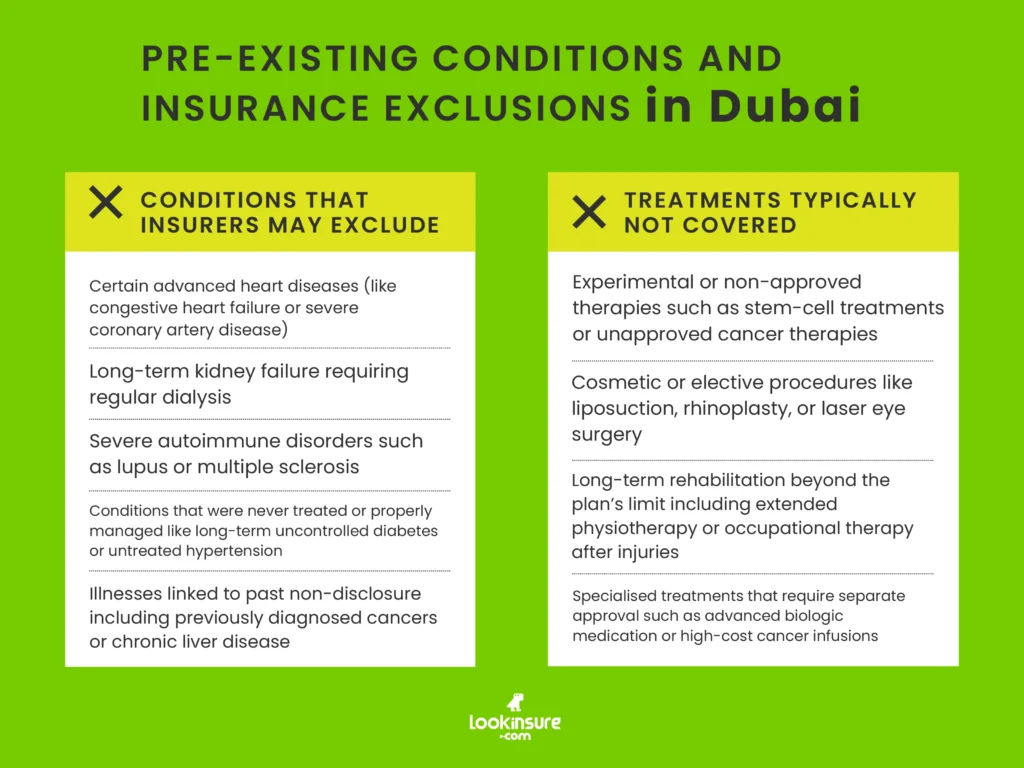
Conditions that insurers may exclude
Some conditions fall under health insurance exclusions Dubai UAE, especially if they require very expensive or long-term care. These may include:
- Certain advanced heart diseases (like congestive heart failure or severe coronary artery disease)
- Long-term kidney failure requiring regular dialysis
- Severe autoimmune disorders such as lupus or multiple sclerosis
- Conditions that were never treated or properly managed like long-term uncontrolled diabetes or untreated hypertension
- Illnesses linked to past non-disclosure including previously diagnosed cancers or chronic liver disease
Treatments typically not covered
Even when the condition itself is covered, some treatments may still be outside the plan’s scope. Common examples include:
- Experimental or non-approved therapies such as stem-cell treatments or unapproved cancer therapies
- Cosmetic or elective procedures like liposuction, rhinoplasty, or laser eye surgery
- Long-term rehabilitation beyond the plan’s limit including extended physiotherapy or occupational therapy after injuries
- Specialised treatments that require separate approval such as advanced biologic medication or high-cost cancer infusions
Situations where claims may be rejected
Claims can also be refused if the insurer finds missing information or a mismatch between the medical history and the claim. This often happens when someone forgets to declare an existing condition or tries to claim for something that clearly falls under health insurance exclusions Dubai UAE. Try to contact your insurer support before submitting a claim to avoid rejections.
How Insurers Evaluate Pre-Existing Conditions
Before insurers agree to cover a person with ongoing health issues, they need a clear picture of that person’s medical history. This helps them decide how the condition fits within pre-existing condition health insurance Dubai rules and what level of cover makes sense.
Medical declaration forms
Every applicant must fill out a declaration form that lists past illnesses, surgeries, medication, and symptoms. This is where people must disclose anything linked to pre-existing conditions UAE. Even small details matter, because insurers use this form as the first step in assessing risk.
Underwriting review
Once the form is submitted, the insurer’s underwriting team checks the information, previous reports, and sometimes old prescriptions. Their job is to decide whether the plan needs a waiting period, whether any exclusions apply, or if the coverage can start immediately.
Medical tests required for some applicants
In some cases, insurers request medical tests to confirm the stability of a condition. This usually happens when someone has a long-term illness and wants wider coverage. The results help insurers finalise the policy terms.
Does Dubai Health Insurance Cover Chronic Illness?
The short answer is yes, but the level of cover depends on the plan and how the condition fits within pre-existing condition health insurance Dubai rules.

What is considered a chronic illness?
A chronic illness is any condition that lasts a long time (more than 1 year )and needs regular checkups or daily medication. Diabetes, asthma, thyroid problems, heart disease, and similar long-term issues all fall under chronic illness.
Medication and long-term treatment coverage
Most insurers cover long-term treatment once waiting periods are over. This usually includes doctor visits, routine tests, and medications.
Limits on outpatient tests and follow-up care
Even when coverage is available, there are usually limits on how many tests, checkups, or scans an insurer will pay for. Some follow-ups may need approval, and certain items may fall under health insurance exclusions Dubai UAE depending on the policy. So keep in mind that checking the outpatient limits is very important before choosing a plan.
Tips for Getting Health Insurance with Pre-Existing Conditions
Finding the right plan is much easier now that you know what insurers look for and how pre-existing condition health insurance Dubai rules actually work. Following few simple steps can make the process even easier:
Full medical disclosure for approval
Always share your full medical history when applying. Insurers rely on this information to decide how your pre-existing conditions UAE should be covered. Clear disclosure helps you avoid rejected claims later on and keeps your policy valid.
Choosing a plan with wider network coverage
Choose wider coverage if your illness is severe. These plans mostly offer a wider hospital and clinic network.
When to upgrade from basic to private plans
Basic plans cover essential care, but private plans offer better limits, more choices, and smoother access to specialists. Upgrading is often a good idea if you need frequent follow-ups, long-term medication, or want to avoid exclusions linked to health insurance exclusions Dubai UAE.
Buying Health Insurance in Dubai with Pre-Existing Conditions
When you are struggling with health issues, you definitely want clear steps to get insured in Dubai. The good news is that you can find plans that fit you, as long as you know what documents are needed and where to buy safely. Keep reading:
Who must self-purchase insurance?
Employees usually get their insurance from their employer, but many others must buy it themselves. This includes dependents, domestic workers, freelancers, retirees, and anyone between jobs. These groups often deal directly with insurers to make sure their pre-existing conditions UAE are properly covered.
Documents required
Buying a plan is simple. Most insurers ask for:
- Passport copy
- Visa or Emirates ID
- Basic medical history
- Contact details
People with long-term illnesses may also need to share reports or prescriptions.
Buying through licensed platforms like Lookinsure
Licensed platforms make the process easier because you can compare plans, prices, benefits, and any limits linked to health insurance in Dubai UAE.
Lookinsure lists only DHA-approved insurers, so you know the plans follow official rules. It also helps you pick policies that are more open to covering pre-existing and chronic conditions.
Why Choose Lookinsure for Pre-Existing Condition Coverage
Our mission is to help you compare plans that work with pre-existing condition health insurance Dubai rules without the stress of calling multiple insurers while struggling with your physical health.
Compare plans that accept chronic illnesses
We show you which policies are more open to covering long-term issues, so you can quickly see how different insurers treat pre-existing conditions UAE.
Access to DHA-approved insurers
All plans listed on Lookinsure come from DHA-approved companies. This means the policies follow Dubai’s official rules, including waiting periods, coverage limits, and anything linked to health insurance exclusions Dubai UAE.
Support team for claim issues
If a claim gets delayed or you’re unsure why something wasn’t approved, our support team can step in and guide you.
Conclusion
Pre-existing and chronic conditions are manageable in Dubai as long as you know the rules and pick the right plan. Honest disclosure, understanding waiting periods, and choosing a policy that supports your long-term needs make all the difference. If you want a fast, reliable way to compare options, Lookinsure helps you find plans that actually work for your situation.
Frequently Answered Questions
1. How long is the waiting period for pre-existing conditions?
Most plans apply a six-month waiting period before covering treatment for pre-existing conditions UAE. After this period, coverage starts based on the plan limits.
2. Does health insurance in Dubai cover pre-existing health conditions?
Yes. The DHA requires coverage for older health issues, especially through the Essential Benefits Plan.
3. Are chronic illnesses included in Dubai health insurance plans?
Yes, chronic illnesses are usually covered once the waiting period is over.
4. Can insurance companies reject my application?
Rejections are rare, but an insurer can refuse an application if the condition is extremely severe or falls under health insurance exclusions Dubai UAE.
5. Is pregnancy considered a pre-existing condition in Dubai?
No. Pregnancy is covered separately under maternity benefits. It is not treated as a pre-existing condition.
6. What happens if I hide a medical condition?
If you hide a medical condition that could’ve affected your premium, it will be considered as insurance fraud and the insurer can cancel the policy or reject future claims.