



Health insurance is mandatory for residents in the UAE, and employers are required to provide medical coverage for their employees. However, some people feel that their employer’s plan does not fully meet their needs. This often raises the question of whether they can purchase additional coverage and hold multiple health insurance policies UAE residents can rely on.
The short answer is yes. A person can legally have more than one health insurance policy in the UAE. But having more than one plan can make things a bit more complicated when it comes to benefits and claims.
In this guide, we explain everything you need to know about multiple health insurance policies UAE residents may hold, including the legal position, the reasons someone might choose dual coverage, and how claims work when more than one insurer is involved.
Too Long; Didn’t Read (TL;DR)
- Holding multiple health insurance policies UAE residents can rely on is generally allowed.
- UAE authorities do not prohibit people from having more than one medical insurance plan.
- You may have dual coverage if you receive insurance from your employer and buy another plan yourself.
- Claims can only be submitted through one insurer for the same medical expense.
- Policy conditions may require you to inform the insurer if you already have another policy.
Is It Legal to Have Two Health Insurance Policies in UAE?
Many residents ask is it legal to have two health insurance policies in UAE when they already receive coverage through their employer.
According to guidance from the Dubai Health Authority, there is no rule that prevents someone from holding more than one medical insurance plan. In practice, this means a person may keep their employer’s policy while also purchasing additional coverage.
However, the details of the policy itself can matter. Some employer-sponsored plans may include conditions about other insurance coverage. In certain cases, the benefits under a company plan may only apply if the employee does not already have another insurance policy paying for the same treatment.
This does not mean a second policy is illegal. It simply means that the insurer or employer may limit how the benefits are used if another plan is already covering the same costs.
Because of this, it is always wise to read the policy terms carefully. Understanding the conditions will help you avoid confusion when making a claim.
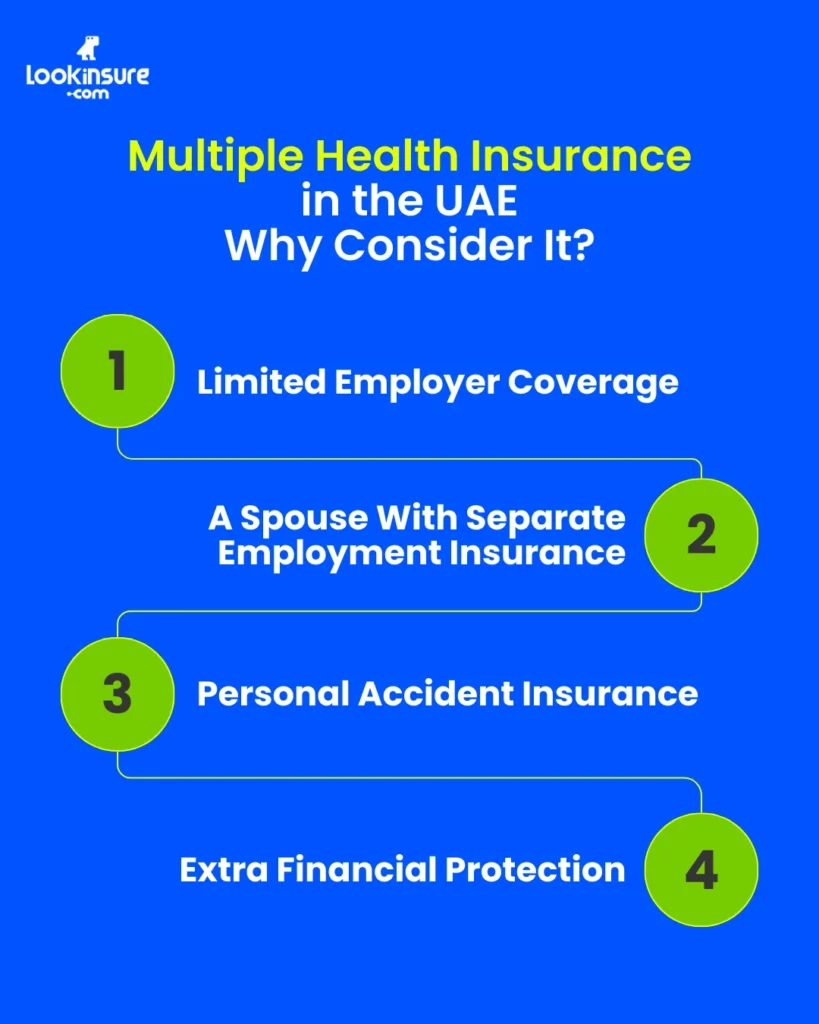
Why Choose Multiple Health Insurance Policies UAE?
There are several practical reasons why someone may want multiple health insurance policies UAE residents can use for additional protection. Each situation is slightly different, but the goal is usually to improve coverage or reduce personal medical costs.
Limited Employer Coverage
Some employer plans offer only basic coverage. They may have low annual limits or exclude certain treatments. In such cases, a person might buy another policy to cover services not included in the company plan. This can provide wider access to hospitals, specialists, or treatments.
A Spouse With Separate Employment Insurance
A common situation occurs when a person is covered under their spouse’s policy. Later, they start a job of their own and receive insurance from their employer as well. As a result, the person may end up with dual health insurance UAE coverage from two different sources.
Personal Accident Insurance
Workers in physically demanding roles sometimes purchase personal accident insurance. This type of policy may cover injuries related to accidents. At the same time, the worker may also be included in the company’s group health insurance plan. This can create two types of medical protection for different situations.
Extra Financial Protection
Some people prefer to have a second policy as a backup. If one plan has limits or exclusions, the second policy may help cover additional expenses. For families with frequent medical needs, this added protection can provide peace of mind.
Dual Coverage & UAE Health Insurance Rules
While dual health insurance UAE coverage is allowed, the process of making claims can become more complicated. Even if you hold two insurance plans, you cannot claim the same medical expense from both insurers. In other words, a single treatment can only be processed through one insurance provider. This rule exists to prevent double payments for the same medical service.
The UAE health insurance rules also mean insurers often include specific clauses in their policies to manage situations where more than one policy exists.
Informing the Insurer About Other Coverage
Many insurance policies require the policyholder to tell the company if they already have another insurance plan. This information usually needs to be provided in writing. If a person fails to inform the insurer about existing coverage, the company may refuse to pay the claim.
Because of this requirement, it is important to be open about any additional insurance you hold.
Shared Responsibility Between Insurers
Some policies state that when more than one insurance plan exists, each insurer will only cover part of the claim. Instead of paying the entire amount, the insurer may pay only a portion based on the coverage limits of each policy.
This approach ensures that one company does not carry the full cost when another insurer also provides coverage.
Secondary or Excess Coverage
Certain policies are designed to work as secondary coverage. In these cases, the second insurer only becomes responsible after the first policy has reached its limit. For example, if the primary insurance plan pays up to a certain amount, the second plan may cover additional costs that exceed that limit.
This structure is another way insurers manage health insurance regulations UAE authorities allow while preventing duplicate payments.
Claim Processing With Two Policies
When someone holds multiple health insurance policies UAE insurers will usually require them to choose which company will handle the claim. The selected insurer becomes responsible for processing the treatment cost according to the policy terms.
If the policy allows excess coverage, the second insurer may become involved only after the first policy has been used. Because the rules can vary between providers, reviewing both policies carefully is essential before making a claim.
Conclusion
Holding multiple health insurance policies UAE residents can rely on is legally allowed and can sometimes be useful. People may receive insurance through their employer while also purchasing their own plan, or they may be covered under a spouse’s policy as well.
However, having more than one policy does not mean you can claim the same medical expense from two insurers. Each treatment must be processed through one provider, and the policy terms will determine how coverage works.
Before purchasing additional insurance, it is important to review the conditions of both policies and understand the relevant UAE health insurance rules. This will help you avoid confusion and ensure that your coverage works as expected when you need medical care.
Frequently Answered Questions
1. Can you have two health insurances in the UAE?
Yes. UAE law does not prevent individuals from holding more than one medical insurance policy. Many people have an employer-sponsored plan and an additional personal policy.
2. How to Claim If You Have Multiple Health Insurance Plans in UAE?
If you have two policies, you must choose one insurer to process the claim for a particular treatment. The same medical expense cannot be claimed from both providers.
3. Can we claim from 2 insurance?
No. Even if you have two policies, you cannot receive payment for the same medical bill from both insurers.
4. Are there risks to having more than one health insurance policy?
The main challenge is understanding how claims will work. Policy conditions may require you to notify the insurer about other coverage, and claims may involve different rules depending on the policy wording.
5. Should I get two health insurance plans?
It depends on your needs. Some people purchase additional insurance because their employer plan is limited or does not cover certain treatments. Reviewing your existing coverage can help you decide if another policy is necessary.






Comments (0)
Leave a comment