


Living with migraine can affect daily life in many ways, from work performance to simple routines. In the context of health insurance in the UAE, many people start asking whether long-term neurological conditions are actually supported by their plans and what kind of treatment is included.
To give a clear and practical understanding this article on health insurance for migraine UAE explains how coverage usually works, what insurers tend to include, and what patients may need to pay out of pocket.
Too Long; Didn’t Read (TL;DR)
- GP and neurologist visits are usually covered under most plans
- Diagnostic tests may need prior approval from the insurer
- Migraine medications are often only partially reimbursed
- Chronic cases can face annual caps on specialist visits
- Costs without insurance vary widely depending on tests and care
- Waiting periods and pre-existing condition rules apply
Health Insurance for Migraine in UAE: What It Usually Means
Health insurance for migraine in UAE generally refers to how standard medical insurance policies handle diagnosis, consultations, and treatment of migraine episodes. In most cases, migraine is treated as an outpatient neurological condition rather than a specialized disease with separate coverage rules.
Coverage depends on:
- Type of insurance plan (basic, enhanced, or premium)
- Whether the policy includes outpatient neurology
- Annual limits for consultations and medications
- Referral requirements from a general practitioner
Many plans in the UAE include neurology consultations, but limits on sessions and medication reimbursement can vary widely.
Understanding Migraine: Causes, Symptoms, and Medical Facts
Migraine is a neurological condition characterized by recurring headaches that can range from moderate to severe. It often affects one side of the head and can last from a few hours to several days.
Common symptoms
- Throbbing or pulsating head pain
- Sensitivity to light and sound
- Nausea or vomiting
- Visual disturbances (aura) in some cases
Causes and triggers
Migraine does not have a single cause. Instead, it is linked to multiple factors:
- Genetic predisposition
- Hormonal changes
- Stress and sleep disruption
- Certain foods (like processed meats or caffeine changes)
- Environmental triggers such as bright light or strong smells
Basic statistics
Studies in clinical neurology suggest that:
- Migraine affects roughly 10–15% of people globally
- It is more common in women than men
- Many cases begin between ages 15 and 40
- A significant number of sufferers experience chronic episodes monthly
Treatment approaches
Common medical treatments include:
- Pain relief medications (such as NSAIDs)
- Triptans for moderate to severe attacks
- Preventive medications in chronic cases
- Lifestyle adjustments (sleep, diet, stress management)
NOTE: There is a phenomenon known as medication overuse headache, where frequent use of migraine medication can actually make headaches worse over time. This happens when the body becomes less responsive to the treatment, leading to a rebound effect that increases headache frequency or intensity.
Does Health Insurance Cover Migraine in UAE?
The question “does health insurance cover migraine” is common among residents, especially those experiencing frequent attacks, by this sometime paralyzing condition.
In most UAE insurance policies:
- GP consultations are usually covered
- Neurologist visits are often covered under outpatient limits
- Diagnostic scans (like MRI or CT) may require pre-approval
- Prescription medications are partially covered depending on tier
However, coverage is not always unlimited. Some plans restrict:
- Number of specialist visits per year
- Types of approved medications
- Reimbursement rates for branded drugs
So, while migraine is not excluded, the level of financial support varies significantly.
Migraine Health Insurance Coverage UAE: What Is Included
Migraine health insurance coverage UAE typically includes a combination of outpatient and diagnostic services. The structure of coverage often depends on whether the policy is employer-provided or individually purchased.
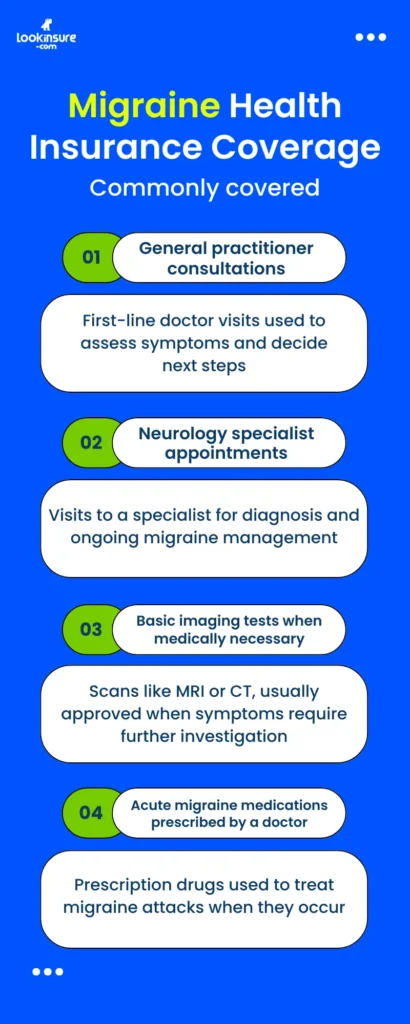
Commonly covered services:
These are the basic medical services most insurance plans in the UAE usually include for migraine care.
- General practitioner consultations: First-line doctor visits used to assess symptoms and decide next steps.
- Neurology specialist appointments: Visits to a specialist for diagnosis and ongoing migraine management.
- Basic imaging tests when medically necessary: Scans like MRI or CT, usually approved when symptoms require further investigation.
- Acute migraine medications prescribed by a doctor: Prescription drugs used to treat migraine attacks when they occur.
Sometimes covered (depending on plan):
These services are not guaranteed and depend on how comprehensive the insurance policy is.
- Preventive migraine treatments: Long-term medications aimed at reducing how often migraines occur.
- Advanced neurological testing: More detailed scans or tests used in complex or severe cases.
- Long-term medication management: Ongoing prescriptions for chronic migraine sufferers under specialist supervision.
Often not fully covered:
These items are typically excluded or only partially reimbursed under most plans.
- Over-the-counter medications: Painkillers and other drugs bought without a prescription.
- Non-essential supplements: Vitamins or herbal products not prescribed as part of treatment.
- Unlimited specialist follow-ups: Repeated neurology visits beyond the annual limits set by the insurer.
Understanding these details is important when evaluating health insurance for migraine in UAE, especially for individuals with chronic symptoms.
Practical Expectations of Medical Insurance for Migraine Patients UAE
Medical insurance for migraine patients in the UAE is generally structured around symptom management rather than cure, since migraine is a chronic condition, that is, a long-term condition that can persist over time and requires ongoing management rather than a one-time treatment.
Patients usually go through a step-based process:
- Visit a GP first
- Get referral to a neurologist
- Undergo diagnostic evaluation if needed
- Start treatment plan (acute or preventive)
Insurance providers often require documentation of:
- Frequency of migraine episodes
- Medical necessity for specialist care
- History of previous treatments
This can affect approval for ongoing treatments or repeated consultations.
Migraine Treatment Costs in UAE Without and With Insurance
What you will be charged for any kind of treatment in the UAE can vary depending on many factors including hospital type and severity of condition.
Without insurance:
- GP consultation: AED 200–500
- Neurologist consultation: AED 500–1,200
- MRI scan: AED 1,500–3,500
- Monthly medication: AED 100–800
With insurance:
Most costs are partially reduced, but out-of-pocket expenses still exist for:
- Co-payments (10%–30% in many plans)
- Non-covered medications
- Excess specialist visits beyond limits
For chronic patients, these small recurring costs can still add up over time.
Migraine Treatment Insurance UAE: Limits and Waiting Periods
In many cases, migraine treatment insurance UAE policies include waiting periods, especially for newly diagnosed or pre-existing conditions. This means that if you buy your policy after you are diagnosed, you will need to wait a certain amount of time before your insurance becomes active and your coverage begins.
Common limitations include:
- Waiting periods for outpatient coverage (3–6 months in some plans)
- Pre-existing condition exclusions or higher premiums
- Annual limits on neurology consultations
- Prior authorization requirements for scans
These conditions are important when choosing health insurance for migraine in UAE, particularly for individuals already diagnosed before purchasing a policy.
Conclusion
Health insurance for migraine in UAE plays an important role in managing a condition that often requires long-term care rather than one-time treatment. Most insurance plans do provide coverage for consultations, diagnostics, and medication, but limits and exclusions are common.
For patients, the most practical step is understanding what outpatient neurology benefits are included and how frequently they can be used. With proper planning, insurance can reduce much of the financial burden linked to ongoing migraine care.
Frequently Answered Questions
1. Does health insurance cover migraine treatment in UAE?
Yes, most policies cover consultations, diagnosis, and basic treatment, but coverage limits vary by plan.
2. Is migraine considered a pre-existing condition in insurance?
It can be, especially if diagnosed before purchasing the policy, which may affect coverage or premiums.
3. Are migraine medications covered by insurance?
Many prescribed medications are covered, but some brands or preventive drugs may have partial reimbursement.
4. Do I need a referral to see a neurologist for migraine?
In most cases, yes. A GP referral is usually required under standard insurance policies.
5. What is the average cost of migraine treatment in UAE?
Without insurance, it can range from AED 200 to over AED 1,000 per visit depending on tests and specialists.
6. Can chronic migraine patients get full insurance coverage?
Full coverage is rare; most plans include caps on consultations and medication reimbursements.





Comments (0)
Leave a comment