


Medical help without having health insurance refers to the limited medical services a person can still access when they do not have an active health insurance policy, usually under emergency rules or specific government healthcare arrangements.
In fact, free health treatment in UAE is generally reserved for Emirati nationals, while expatriates rely on alternative, often temporary, solutions. So getting medical treatment without health insurance in the UAE can be different for each person.
This article explains exactly how the system works, what options are available if you are uninsured, and why these options should be seen as short-term safety nets rather than permanent solutions.
Too Long; Didn’t Read (TL;DR)
- You can get medical help without having health insurance in the UAE, but it is mostly limited to emergencies, basic care, or short-term government options, not full medical coverage.
- Emergency and life-saving treatment is provided first regardless of insurance status, but billing and payment discussions usually come after the patient is stabilized.
- Free health treatment in UAE is generally reserved for Emirati nationals; expatriates and tourists rely on paid private care, low-cost clinics, or limited government services like the Dubai Health Card.
- Medical care without insurance in the UAE should be treated as a temporary safety net, not a long-term solution.
Is Health Insurance Mandatory in the UAE?
Health insurance is legally required for everyone living in the UAE, but that does not mean medical treatment completely disappears the moment you are uninsured.
In practice, medical care without insurance in the UAE is possible in certain situations, especially during emergencies, but it comes with clear limits.
Can You Get Medical Help Without Health Insurance in the UAE?
Yes, you can, but it depends on what kind of care you need and how urgent the situation is. In the UAE, not having insurance does not automatically mean you will be turned away the moment you walk into a clinic or hospital. What it usually means is that your access to care changes shape: emergency care is treated one way, and non-emergency care is treated another.
If your condition is life-threatening or could quickly become life-threatening, treatment normally comes first and paperwork comes later. But if your situation is routine, stable, or something that can safely wait, healthcare providers are more likely to ask about coverage and payment arrangements upfront.
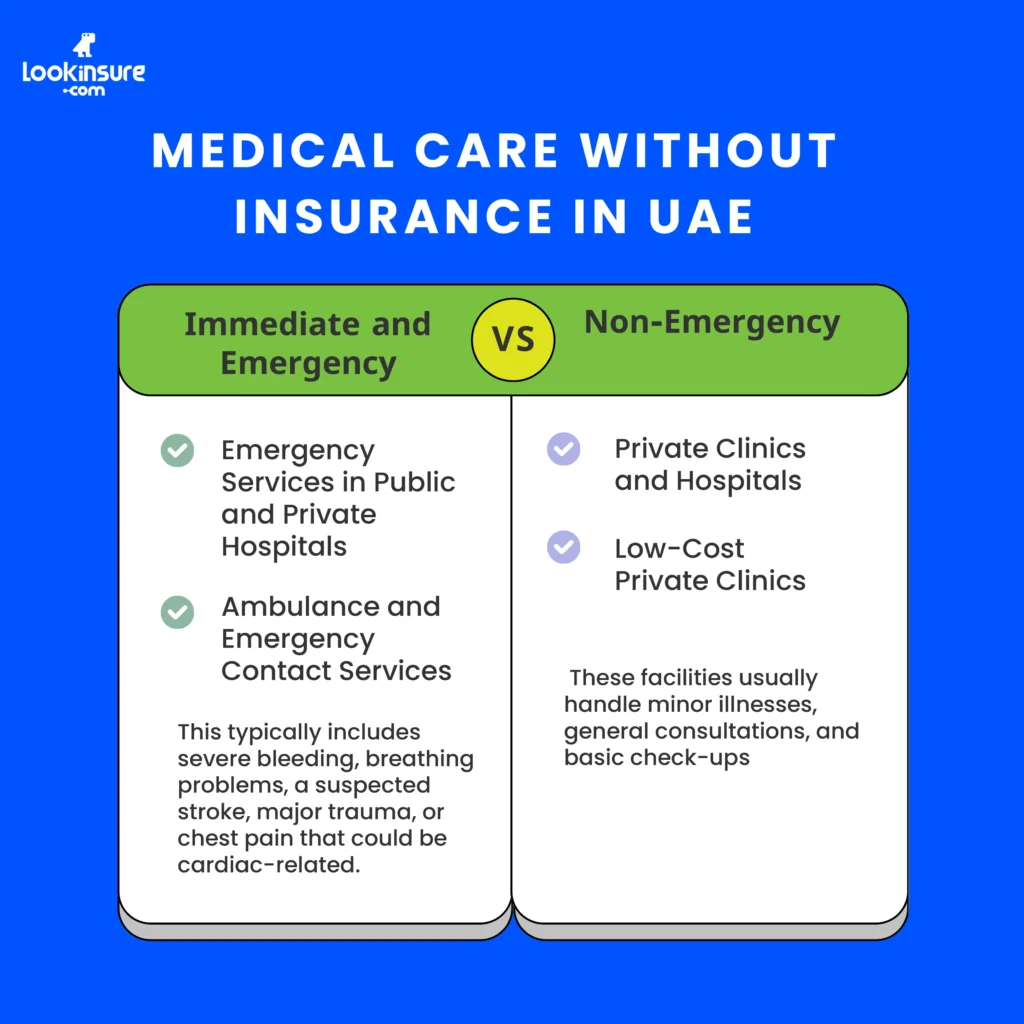
Immediate and Emergency Medical Care Without Insurance
When the situation is serious, hospitals and emergency services focus on stabilizing the patient first and after that follow-up care and ongoing treatment which involves billing discussions once the person is medically safe. So in an emergency, forget about your health insurance.
Emergency Services in Public and Private Hospitals
In genuine emergencies, hospitals in the UAE generally provide life-saving care even if a patient does NOT have active health insurance. This typically includes severe bleeding, breathing problems, a suspected stroke, major trauma, or chest pain that could be cardiac-related.
After the patient is stabilized, the hospital usually shifts into the administrative side of care. At that stage, staff may ask for identification, insurance details (if any exist), and a plan for how the remaining treatment will be handled.
Ambulance and Emergency Contact Services
Emergency medical services are designed for situations where someone’s life may be at risk or where delaying care could lead to serious harm. If a person is unconscious or has a major injury, calling emergency services is the right move.
It also helps to understand the difference between emergency and urgent. Emergency means immediate danger to life or serious long-term harm if delayed. Urgent means the problem is concerning and needs medical attention soon, but the person is generally stable. Always call emergency contact, they will know the difference and will help you ASAP.
Non-Emergency Medical Care Without Insurance
Outside emergency situations, options become more limited and more conditional. Let’s talk into details:
Private Clinics and Hospitals
Many private healthcare facilities require upfront payment before providing non-emergency treatment. In some cases, clinics may still see uninsured patients, but the financial responsibility falls entirely on the individual.
Low-Cost Private Clinics
There are clinics that focus on providing basic healthcare services at more affordable levels. These facilities usually handle minor illnesses, general consultations, and basic check-ups. Such clinics can be suitable for short-term needs to get medical help without having health insurance, but they are not designed to replace comprehensive health insurance or manage complex medical conditions.
Accessing Affordable Government Healthcare Services
Government healthcare systems do offer limited access points for residents to get medical care without insurance in the UAE.
Dubai Health Card for Dubai Residents
The Dubai Health Card is a government-issued card that allows only residents to access public healthcare services at government hospitals and clinics. It is not health insurance, but it can reduce barriers to treatment.
Your eligibility depends on residency status and documentation. The card typically covers basic medical services and differs from full insurance, it’s like a backup plan.
Government Clinics in Other Emirates
Other emirates of the UAE operate government health centers through centralized public health authorities. These clinics provide essential medical services and often require standard documentation such as identification and residency details.
Availability and access may vary depending on the emirate, and services are usually focused on primary healthcare rather than specialized treatment.
Medical Financial Assistance and Charitable Support
In specific situations, financial assistance for medical care may be available to support UAE residents in difficult times.
Patient Support Programs
There are medical assistance programs designed to support patients who face financial hardship. These programs may help cover certain treatments or provide access to care through public facilities to get free health treatment in UAE.
Eligibility is usually assessed on a case-by-case basis and often depends on income level, medical necessity, and residency status.
Government-Supported Medical Aid Initiatives
Government-backed initiatives exist to ensure that vulnerable individuals are not left without essential medical care. It focuses on basic treatment needs and are typically provided through public healthcare systems known as free health treatment in UAE.
Special Situations to Consider
Some groups face unique challenges when it comes to healthcare access. We’ll explain each situation with its solution:
Tourists Without Health Insurance
Tourists are not eligible for subsidized public healthcare or free health treatment in UAE. Still, medical treatment is available, but it is typically provided on a private basis, with full financial responsibility placed on the patient.
This is why travel medical coverage is strongly recommended for visitors, as medical expenses can escalate quickly without it.
Residents Between Jobs or Visa Status
If you’re changing jobs or experiencing visa transitions you may temporarily lose health insurance coverage. During this period, access to care becomes more complicated.
For these situations, we recommend short-term coverage which are among the best options when it comes to health insurance for visitors in the UAE, but remember that they are limited.
Why Health Insurance Is the Best Long-Term Solution
While medical help without having health insurance is possible in the UAE, it is not designed to be a long-term solution for anyone.
Full Health insurance provides financial protection against unexpected medical costs, ensures compliance with local laws, and offers consistent access to healthcare services. Over time, having coverage is usually more cost-efficient and less stressful. So, if you are a resident or expat, always look for long-term health insurance.
Conclusion
Medical treatment without insurance in the UAE is possible, but it is limited, conditional, and often temporary. Emergency care is provided regardless of coverage, and certain government healthcare options can help bridge short gaps.
However, medical care without insurance in the UAE should be seen as a safety net, not a substitute for proper coverage. Free health treatment in UAE is largely reserved for Emirati nationals, leaving residents and visitors to rely on insurance or short-term alternatives.
Frequently Answered Questions
1. Can hospitals refuse treatment if I do not have health insurance in the UAE?
Hospitals cannot refuse emergency, life-saving treatment, but non-emergency care may require payment or insurance.
2. Is any free health treatment available for non-Emiratis in the UAE?
It depends on the emirate. Dubai has no free treatments for foreigners but some NGOs and public programs offering low-cost services are available in other emirates.
3. What is a Dubai Health Card and who is eligible to apply for it?
It is a government-issued card for Dubai residents that allows access to public healthcare services, but it is not full insurance.
4. Are emergency medical services free without insurance in the UAE?
Emergency treatment is provided first, but costs may still apply after stabilization.
5. Can tourists receive medical treatment without health insurance in the UAE?
Yes, but treatment is typically provided on a private basis with full financial responsibility.
6. What is the safest option if I cannot afford health insurance at the moment?
Using government healthcare services where available and securing coverage as soon as possible is generally the safest approach.
Comments (0)
Leave a comment