


Understanding how hospitals are classified is essential when choosing health insurance in UAE. Many policyholders only realize the importance of this distinction when they need treatment. Knowing the difference between network vs non-network hospitals and how each works can help you avoid delays, unexpected costs, and confusion at a stressful time.
Too Long; Didn’t Read (TL;DR)
- Network hospitals let your insurer pay the hospital directly, so you usually don’t pay upfront.
- Non-network hospitals require you to pay first and then request your money back.
- Network care is simpler and faster, especially for planned treatment.
- Non-network care gives more choice but involves more paperwork and waiting.
- Always checking hospital coverage in advance can save time and stress.
What Is Network Hospital Meaning In Health Insurance?
The network hospital meaning in health insurance is this: hospitals and clinics that have a formal agreement with your insurance provider.
These agreements allow insurers to settle bills directly with the hospital. As a result, policyholders can receive treatment without paying upfront in many cases.
Network hospitals are carefully selected based on factors such as service quality, pricing agreements, and geographic coverage. Insurers maintain updated lists of these hospitals, and they are usually easy to find on the insurer’s website or app.
For patients, the main benefit is convenience. You show your insurance card, get approval, and receive treatment with minimal financial hassle.
What Are Non-Network Hospitals?
Non-network hospitals are medical facilities that do not have any direct agreement with your insurance provider.
This does not mean you cannot receive treatment there. However, the process is different. You will typically need to pay the full cost yourself and then request reimbursement from your insurer later.
Some people still choose non-network hospitals due to personal preference, location, or access to a specific doctor. However, this choice often comes with more paperwork and waiting time.
Network Vs Non Network Hospitals: Key Differences
When comparing network vs non network hospitals, the differences become clear in terms of cost, process, and convenience.
| Aspect | Network Hospitals | Non-Network Hospitals |
|---|---|---|
| Payment Method | Bills are settled directly by the insurer | You pay first and claim later |
| Claim Type | Cashless claims | Reimbursement claims |
| Approval Process | Hospital coordinates approval with insurer | You handle submission and follow-up |
| Out-of-Pocket Costs | Lower immediate expenses | Higher upfront payment required |
| Time And Effort | Faster and more convenient | More paperwork and waiting time |
Understanding this difference between network and non network hospital helps you plan better and avoid surprises.
Network Hospital Vs Non Network Hospital: Which Is Better?
The answer depends on your situation.
A network hospital vs non network hospital comparison shows that network hospitals are usually better for routine or planned treatments. They offer ease and lower immediate financial pressure.
However, non-network hospitals may be useful in emergencies where the nearest hospital is not part of your insurer’s network. They can also be preferred if you trust a specific doctor or facility.
In general, insurers design their plans to encourage using network hospitals due to cost control and efficiency.
Cashless Vs Reimbursement Claim: How They Work
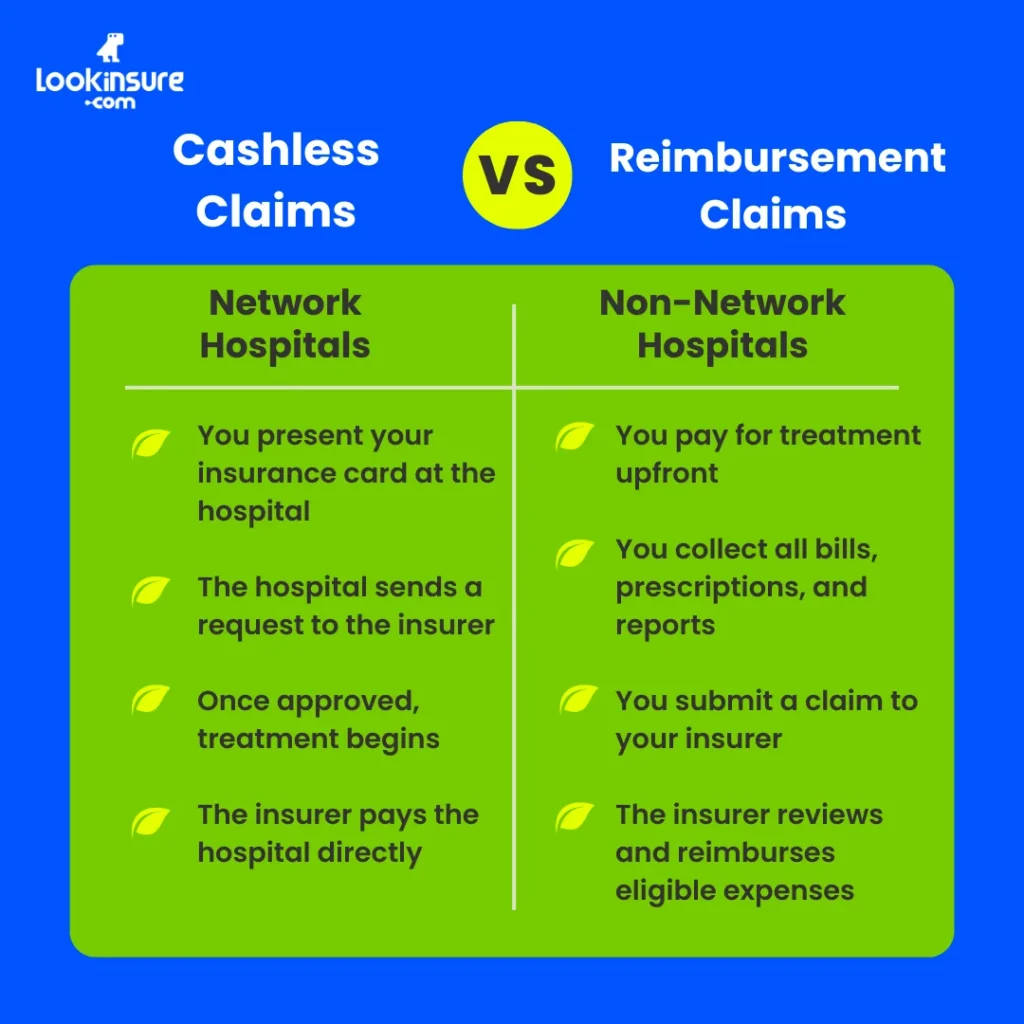
The concept of cashless vs reimbursement claim is central to understanding network vs non network hospitals.
Cashless Claims (Network Hospitals)
One of the main changes brought about by the new era of digital health care in the UAE has been how claims are handled. with cashless claims the process is super simple:
- You present your insurance card at the hospital
- The hospital sends a request to the insurer
- Once approved, treatment begins
- The insurer pays the hospital directly
This process reduces stress during medical situations and is widely preferred.
Reimbursement Claims (Non-Network Hospitals)
Without the direct partnership between your provider and the hospital you visit, claims can become a bit more complicated.
- You pay for treatment upfront
- You collect all bills, prescriptions, and reports
- You submit a claim to your insurer
- The insurer reviews and reimburses eligible expenses
This process takes more time and requires careful documentation.
Non Network Hospital Claim Process Explained
The non network hospital claim process can feel complex if you are not prepared.
Here is how it typically works:
- Receive Treatment
Visit any hospital of your choice and pay the full bill. - Collect Documents
Ensure you get original invoices, discharge summary, prescriptions, and test reports. - Fill Out Claim Form
Download the claim form from your insurer’s website and complete it accurately. - Submit the Claim
Send all documents within the required time frame, usually 30 to 60 days. - Claim Review
The insurer checks the documents and may request additional details. - Reimbursement
Approved amounts are transferred to your bank account.
Delays often happen due to missing paperwork or unclear documentation. Keeping everything organized makes a big difference.
Why Insurers Prefer Network Hospitals
Insurance companies encourage the use of network hospitals for several reasons. They can negotiate treatment costs in advance, which helps control overall expenses. This also allows them to offer better pricing to policyholders.
Network hospitals also follow agreed procedures, making claim approvals faster and more predictable. For patients, this means fewer disputes and a smoother experience.
When Should You Choose A Non-Network Hospital?
Despite the advantages of network hospitals, there are situations where a non-network hospital makes sense.
- Emergency situations where the nearest hospital is not in the network
- Specialist care that is not available within the network
- Personal preference for a specific doctor or facility
In these cases, understanding the non network hospital claim process becomes essential to avoid complications later.
Common Mistakes To Avoid
Many policyholders face issues simply because they are unaware of basic procedures.
- Not checking whether a hospital is in the network
- Forgetting to get pre-approval for planned treatments
- Missing claim submission deadlines
- Submitting incomplete documents
Avoiding these mistakes can save both time and money.
How To Check If A Hospital Is In The Network
Most insurers in the UAE provide updated hospital lists through:
- Official websites
- Mobile apps
- Customer service helplines
It is always a good idea to confirm before visiting a hospital, especially for planned procedures.
Conclusion
The concept of network vs non network hospitals plays a key role in how your health insurance works. Network hospitals offer ease, faster approvals, and lower upfront costs. Non-network hospitals provide flexibility but require more effort and financial planning.
Understanding the difference between network and non network hospital options helps you make better decisions during both routine care and emergencies. With a little preparation, you can use your insurance more effectively and avoid unnecessary stress.
Frequently Answered Questions
1. What is the main difference between network and non network hospital?
The main difference lies in payment and claim processing. Network hospitals offer cashless treatment, while non-network hospitals require reimbursement claims.
2. Can I go to a non-network hospital with insurance in UAE?
Yes, you can. However, you will need to pay upfront and follow the non network hospital claim process to get reimbursed.
3. Is cashless treatment available in all hospitals?
No, cashless treatment is only available in network hospitals that have agreements with your insurer.
4. How long does a reimbursement claim take in UAE?
It usually takes a few weeks, depending on the insurer and the completeness of your documents.
5. Are network hospitals cheaper than non-network hospitals?
They are often more cost-effective due to pre-agreed pricing between insurers and hospitals.
6. Should I always choose a network hospital?
It is generally recommended for convenience and lower upfront costs, but non-network hospitals can be useful in specific situations.






Comments (0)
Leave a comment