




The vehicle fitness certificate in UAE is a mandatory document that confirms your vehicle’s roadworthiness, ensuring it meets all safety and emission standards required by law. Also known as a vehicle passing certificate, it is essential for registering and renewing your Mulkiya, serving as official proof that your vehicle has successfully passed the necessary inspections to operate legally on the roads, thereby safeguarding both drivers and residents alike.
Too Long; Didn’t Read (TL;DR)
- What it is: Official document (vehicle passing certificate) proving your car meets safety and emissions standards
- Who needs it: Cars older than 3 years must be tested annually; new cars exempt for first 3 years
- Purpose: Required for vehicle registration renewal and legal driving; ensures road safety
- Insurance: Valid car insurance in the uae is mandatory before inspection
- Inspection checks: Brakes, steering, suspension, tires, lights, engine, emissions, safety systems, required tools, chassis, and vehicle identification
- Certificate validity: 30 days after passing; repairs must be done and re-tested within this period if failed
- Fees: Dubai AED 150, Abu Dhabi AED 165
- Tip: Maintain your car, keep safety tools ready, clear fines, and schedule the test in advance for smooth vehicle fitness renewal
What Is a Vehicle Passing Certificate?
A vehicle passing certificate is an official document issued after your car passes a comprehensive inspection at authorized testing centers, confirming it meets all safety, emissions, and roadworthiness standards required for a car inspection certificate in UAE. It serves as legal proof that your car is safe to drive, covering key checks like brakes, tires, lights, emissions, and overall structural integrity.
Acting as an essential safety checkpoint, it helps reduce the risk of accidents caused by mechanical failures and is often required for processes like registration renewal and maintaining valid car insurance in the UAE.
Why it’s important for Safety and Compliance
A vehicle passing certificate is required to prove your car meets safety standards and is mandatory for registration and renewal in the UAE. It helps prevent accidents caused by faulty vehicles, and having valid car insurance in the uae is also necessary for compliance and financial protection.
Key points:
- Ensures your car meets safety and emissions standards for a vehicle fitness certificate in uae
- Helps reduce accidents caused by vehicle malfunctions
- Required for vehicle registration and renewal
- Supports compliance with UAE traffic laws
- Valid car insurance in the UAE is often needed for inspection and financial protection
What Is Inspected During the Vehicle Fitness Certificate in UAE Test?
During inspection for a vehicle passing certificate, your car is checked to ensure it meets safety, mechanical, and environmental standards required for a car inspection certificate in UAE.
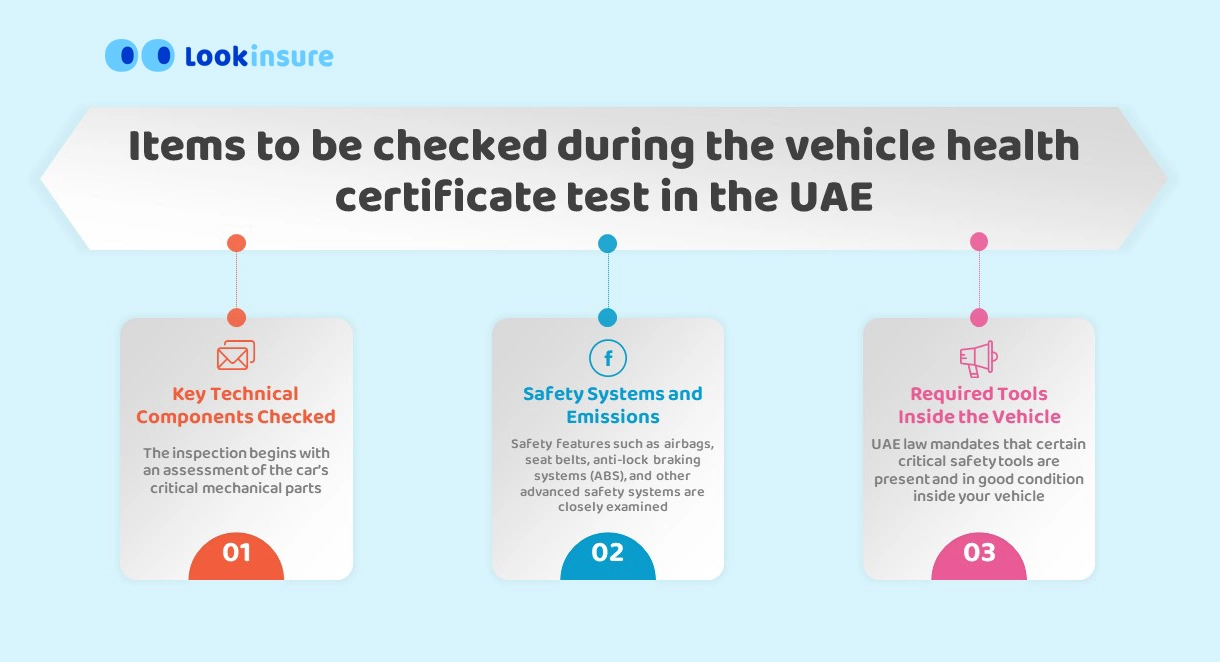
What gets checked:
- Vehicle identification – registration plate and chassis number are verified to match official records
- Emissions – exhaust system is tested to ensure it meets legal standards; excessive smoke or failed results lead to rejection
- Brakes – service and parking brakes are checked for condition, performance, and efficiency
- Steering and suspension – inspected for wear, stability, and secure attachment to ensure proper handling
- Tires – checked for minimum tread depth, correct pressure, and absence of cracks or uneven wear
- Lights and electricals – all lights must function properly; horn and dashboard indicators are also tested
- Visibility – windshield, windows, mirrors, and wipers are checked for damage or obstructions
- Fluid leaks – any leaks in oil, coolant, or brake systems can result in failure
- Chassis and bodywork – frame, panels, bumpers, and doors are inspected for structural integrity
- Safety equipment – must include a working fire extinguisher, warning triangle, and spare tire
- Other checks – driver’s seat, battery mounting, and seat belts are inspected for safety and proper condition
Vehicle Testing Procedure in the UAE
Getting your vehicle inspected in the UAE involves a straightforward process with certain clearly outlined steps. Understanding each step of getting a vehicle fitness certificate in UAE beforehand can make the process smoother and more efficient.
Step-by-Step Process to Get Vehicle Passing Certificate
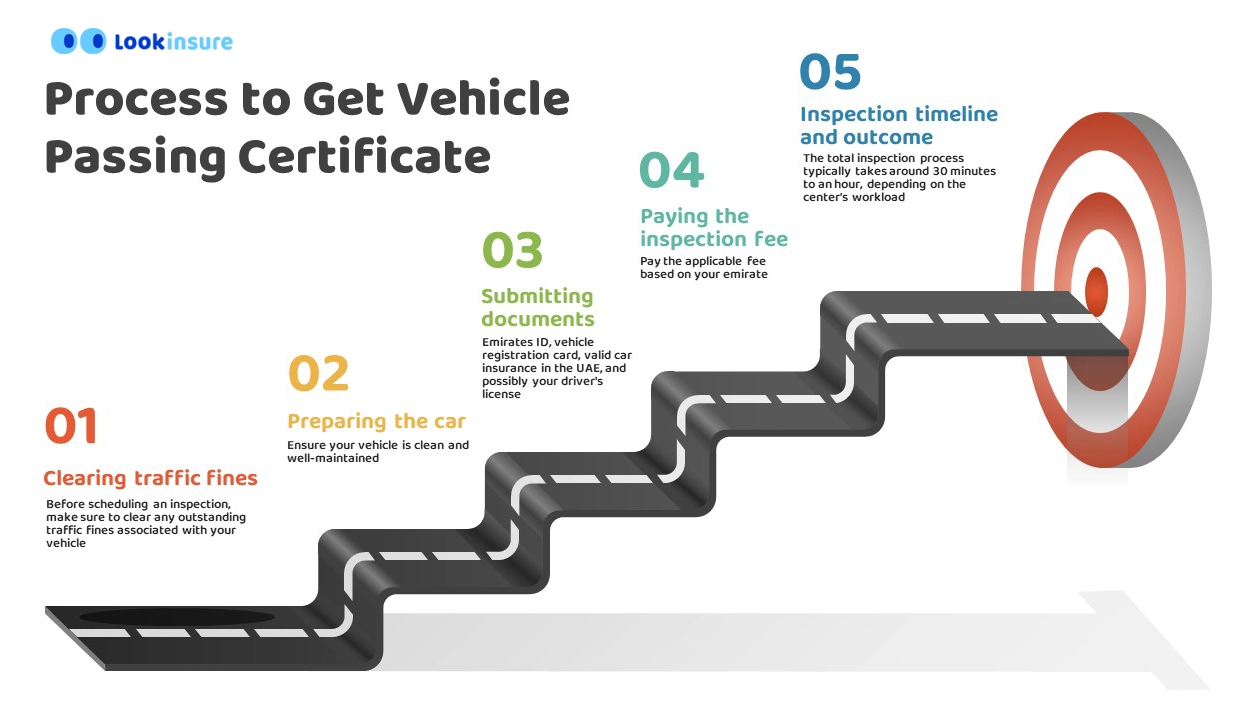
- Book inspection: schedule your vehicle test at an authorized center. You can do this either online through the RTA website or by visiting any Tasjeel center near you.
- Submit documents: submit the required documents for car passing which include: registration, ID, and car insurance
- Vehicle check: inspectors examine safety, mechanical, and emissions standards
- Receive certificate: get your vehicle passing certificate or vehicle fitness certificate in UAE
- Address issues: if the vehicle fails and re-test as needed you will have to fix the issues and do a re-test after 30 days
NOTE: Before scheduling an inspection, you might be required to clear any outstanding traffic fines associated with your vehicle. Authorities often require proof that all fines are paid to proceed with the inspection, aligning with the UAE’s strict traffic compliance policies. To speed up the process, learn more about how to pay traffic fines online.
Vehicle Passing Certificate Fees in Different Emirates
AED 150 in Dubai
The inspection fee in Dubai is AED 150, and the process is usually quick, with most results available within a few hours or the next day.
AED 165 in Abu Dhabi
In Abu Dhabi, the fee is slightly higher at AED 165. The process remains similar, with the government aiming to maintain high standards of safety and environmental compliance.
What Happens After the Test?
Once your vehicle has been inspected, the next steps depend on whether your car successfully passes the test or requires repairs and re-inspection. Understanding what to expect helps ensure a smooth process, whether you’re celebrating a pass or preparing for a re-test.
If your car passes: you receive a vehicle passing certificate valid for 30 days. Use this period to complete registration renewal or other legal formalities. The certificate confirms your car meets safety and environmental standards, allowing you to drive legally in the UAE.
If your car fails: you’ll get a list of issues to fix, such as brakes, tires, emissions, or safety system problems. Complete the repairs and return for a re-test, which is straightforward and designed to get you back on the road quickly.
Re-test: must be done within 30 days of the initial inspection. Fees are usually lower (around AED 50–80, depending on the emirate). Missing this window may require a full inspection again. Passing the re-test issues a valid vehicle passing certificate for another 30 days.
Types of Vehicle Testing in the UAE

The UAE offers various types of vehicle tests to ensure safety, compliance, and proper functioning of vehicles on the road. Here are the main categories:
New Vehicle Registration Test
This test is conducted when registering a brand-new vehicle for the first time or transferring vehicle ownership in Dubai or other emirates. It verifies that the vehicle meets all safety and emission standards before it is allowed on public roads.
Periodic Vehicle Test
Regularly scheduled inspections are required for all vehicles to maintain their roadworthiness. These tests ensure ongoing compliance with safety and environmental regulations and are mandatory for renewal of vehicle registration.
Defect Test
Performed when a vehicle is suspected of having safety issues or after being involved in an accident. This test assesses the specific defects and determines if the vehicle is fit to drive.
Export Test
Designed for vehicles being exported or relocated outside the UAE. It verifies that the vehicle complies with export regulations and is suitable for transfer to another country.
Re-Test
A follow-up inspection is required after repairs or corrections following an initial failure. It confirms that the issues have been adequately addressed and that the vehicle is now safe and compliant.
Documents Required for Vehicle Passing in UAE
To ensure a smooth testing process, you need to prepare certain documents and meet some requirements beforehand:
Basic Documents (Emirates ID, Insurance, Registration Card)
The essential documents for the Vehicle passing certificate are your Emirates ID, valid vehicle insurance, and vehicle registration card. These verify your identity, ownership, and insurance coverage, which is mandatory for the inspection.
Additional Requirements in Some Emirates
In some emirates, you might also need to present your driver’s license or other specific permits, especially if you’re attending a private testing center or appointment. Always check local requirements to avoid delays.
Checklist Before Testing
- Ensure your vehicle documents (Emirates ID, registration, insurance) are valid and available.
- Confirm vehicle cleanliness and proper functioning of safety tools (spare tire, triangle, extinguisher).
- Clear any pending traffic fines.
- Schedule your appointment in advance if required.
Being well-prepared helps prevent the need for multiple visits and speeds up the certification process.
Tips to Pass the Vehicle Test on First Attempt
Preparing your vehicle properly can greatly increase your chances of passing the test on the first try. Here are some practical tips to get vehicle fitness certificate in UAE:
Clean the Vehicle Thoroughly

Make sure your car is clean inside and out. A tidy vehicle is easier for inspectors to examine and shows you take maintenance seriously.
Ensure All Lights and Indicators Work

Check that all headlights, brake lights, indicators, and signal lights are functioning properly. Faulty lighting is a common cause of failure.
Check Tire Condition and Alignment

Inspect your tires for adequate tread depth and proper inflation. Ensure tires are in good condition and correctly aligned for optimal safety.
Keep Mandatory Safety Tools in the Car

Ensure that essential safety tools such as the spare tire, safety triangle, and fire extinguisher are present, accessible, and in good condition.
Resolve any Dashboard Warnings

Address any warning lights or alerts on your dashboard before the test. Fault codes can lead to failure, so fix issues or consult a mechanic if necessary.
What Happens If You Don’t Get the Certificate?
Failing to obtain the vehicle testing certificate can lead to various consequences, including legal penalties and registration issues.
Registration/Renewal Delays
Without a valid testing certificate, you won’t be able to renew your vehicle registration or complete the registration process. This delay can prevent you from legally driving your vehicle on UAE roads.
Potential Fines
Driving without a vehicle fitness certificate in UAE or overdue registration renewal can result in fines imposed by traffic authorities. Fines vary depending on the emirate and the duration of non-compliance.
Legality of Driving without a Valid Certificate
It is illegal to drive a vehicle without passing the required inspection and holding a valid certification. Carrying an expired or missing certificate can lead to penalties, vehicle impoundment, or even court fines. Always ensure your vehicle has a current, valid inspection certificate before hitting the road.
Your Path to Compliance and Road Safety
Securing your vehicle fitness certificate in UAE (officially called a Vehicle passing certificate) is non-negotiable for legal driving and registration renewal. This mandatory inspection ensures road safety, emission compliance, and mechanical reliability. Remember: valid car insurance in the UAE is essential before testing. Proactively maintain your vehicle, carry required safety tools, and renew your certificate before expiry to avoid fines and keep your journey uninterrupted.
Informative Blogs:
Frequently Asked Questions (FAQs)
1. What is vehicle passing in UAE?
It is the certification that confirms a vehicle has met safety and environmental standards after inspection, allowing it to be registered or renewed.
2. How to check vehicle passing status in Dubai?
You can check it online via the Dubai RTA website or app using your vehicle details or registration number.
3. How long is the passing paper valid for in UAE?
The vehicle passing certificate is typically valid for 30 days from the date of inspection.
4. What do they check for car passing in Dubai?
For a car passing in Dubai, inspectors check: brakes, steering, suspension, tires, lights, engine and emissions, safety systems (airbags, seat belts, ABS), required tools (spare tire, fire extinguisher, warning triangle), chassis and body condition, and vehicle identification details.
5. How many attempts are allowed for the RTA road test?
Usually, you are allowed up to three attempts. After multiple failed attempts, you may need to wait or reapply for the test.
6. How much for car passing in the UAE?
the inspection fee in Dubai is AED 150 and in Abu Dhabi 165.





Comments (0)
Leave a comment